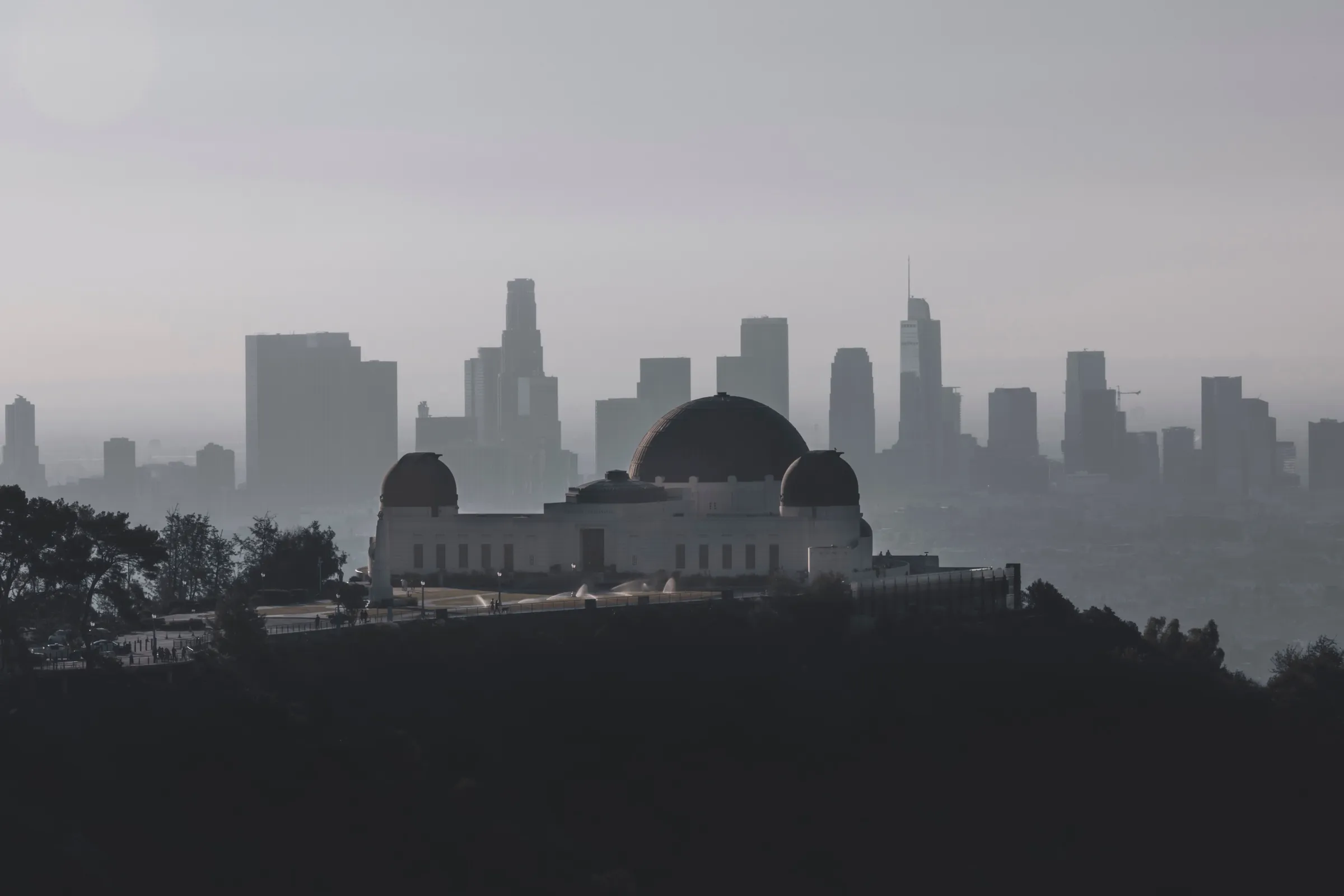
Griffith Park & Observatory
The Griffith Observatory offers a unique blend of science, history, and breathtaking views for visitors of all ages.
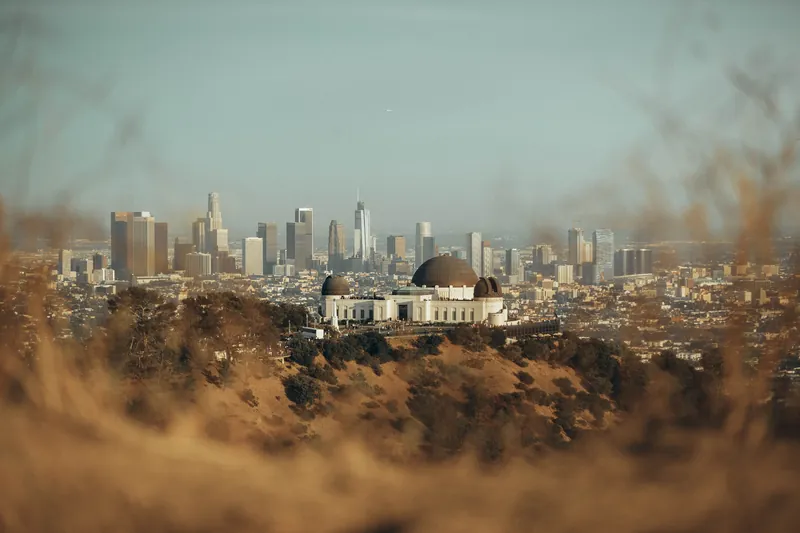
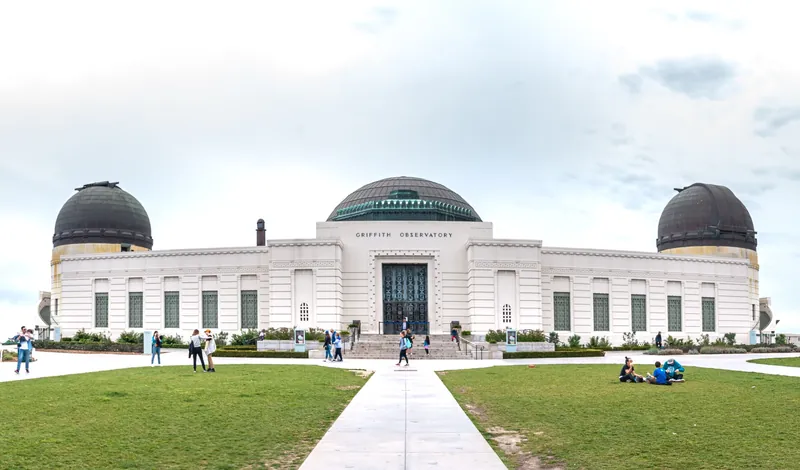
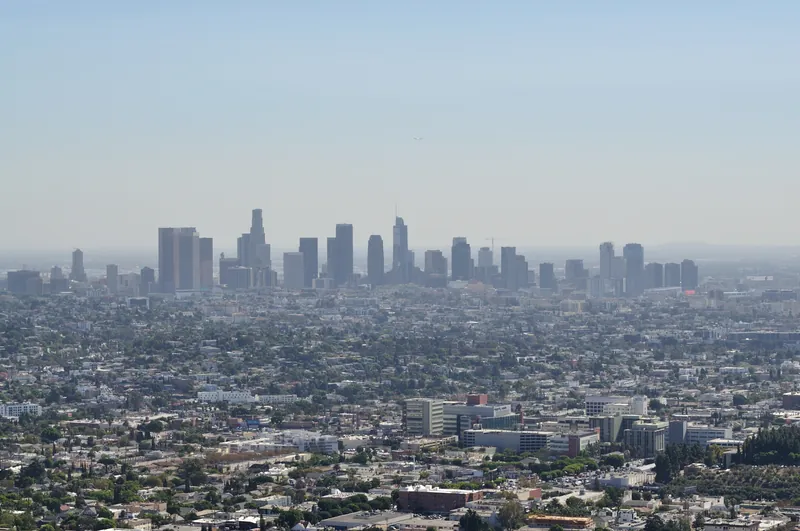
The 1935 Art Deco Griffith Observatory sits 1,134 feet up on Mount Hollywood's southern slope, framing a 270-degree sweep of the LA basin with the Hollywood Sign behind it. Free entry covers public telescopes and planetarium shows, and 53 miles of park trails lead to the original Bat Cave, the old LA Zoo, and Travel Town Museum.
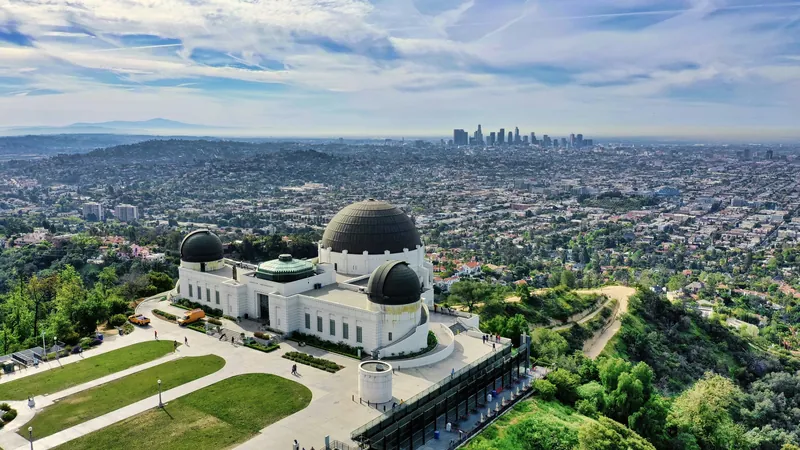
Griffith Observatory's History and Fall Screenings
On the south slope of Mount Hollywood, within Griffith Park—the largest urban-wilderness municipal park in the United States—sits Griffith Observatory. Griffith J. Griffith, who had given the park's land to the city in 1896, donated the 1935 building to Los Angeles, and a $93-million renovation closed it from January 6, 2002 until it reopened on November 2, 2006. Fall 2026 brings two evenings of outdoor screenings of the 1955 film "Rebel Without a Cause" held under the stars at the site.
Best Photo Spots
6 photo spots across Griffith Park & Observatory include trails, overlooks, observatory terraces, and a historic picnic area.
Mt. Hollywood Trail
Photographs of This Location
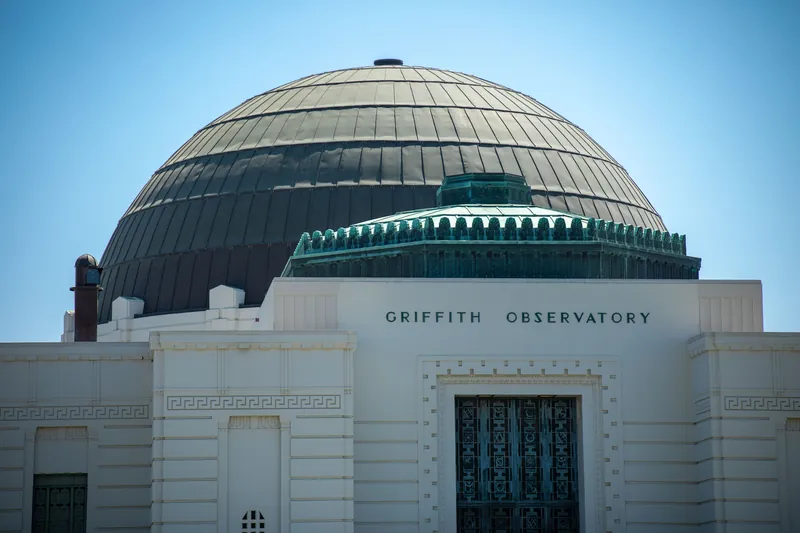
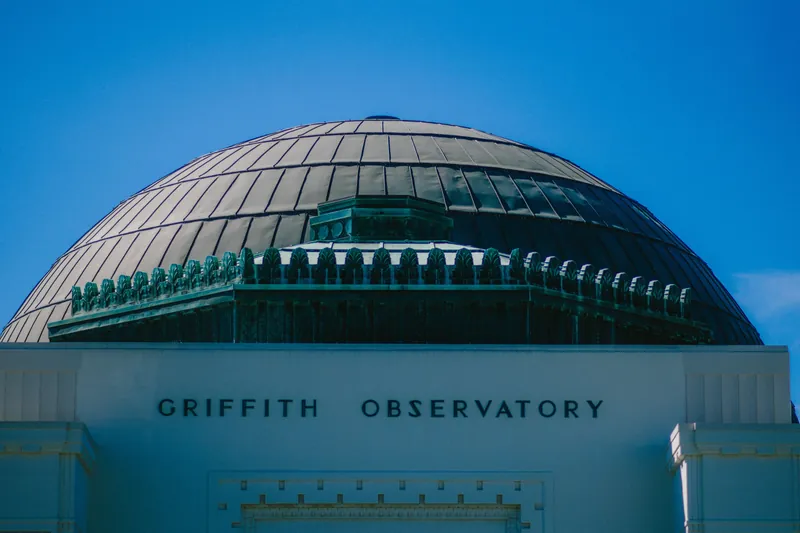
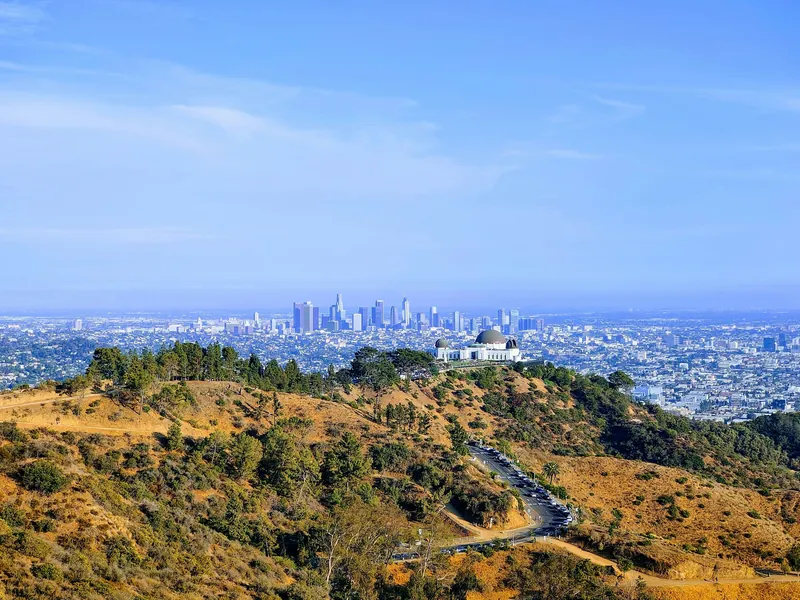
Griffith Observatory and Park Landmarks
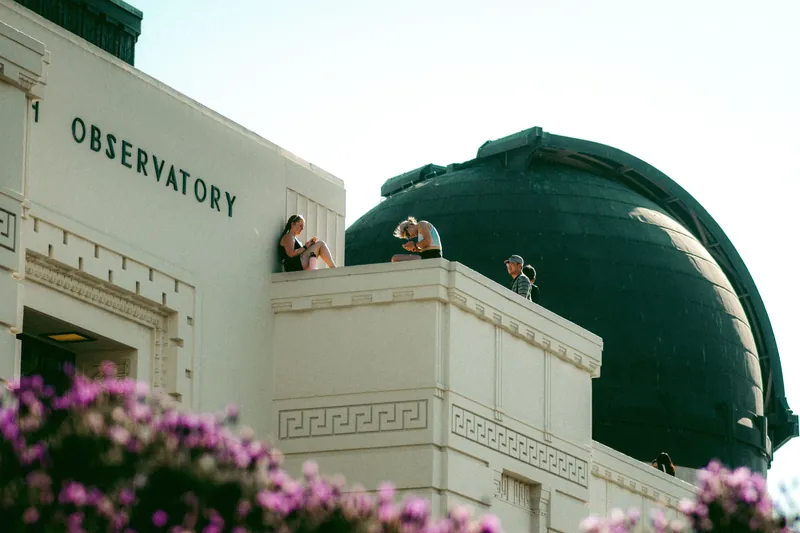
Griffith Observatory, an Art Deco landmark built in the 1930s on the north slope of Mt. Hollywood, has appeared in films including La La Land, Rebel Without a Cause, The Terminator, Charlie's Angels: Full Throttle, and Transformers. The Mt. Hollywood Trail running near the building offers clear-day sightlines from Downtown Los Angeles past Century City and Santa Monica to Palos Verdes and Catalina Island on the horizon. Within the same park, the stone structures and weathered cages of the old Los Angeles Zoo, closed and gutted in the mid-1960s, stand as ruins, and the Travel Town Museum displays equipment from the first transcontinental railroad completed about 150 years ago.
Common Questions
Griffith Observatory is open Tuesday–Friday 12:00 noon–10:00 p.m., Saturday–Sunday 10:00 a.m.–10:00 p.m., and closed Mondays.
Public transportation is the easiest way to visit; visitors may also walk, bike, drive, or take a shared-ride service to Griffith Observatory.
The tour is family-friendly, but the Samuel Oschin Planetarium only admits guests 5 and older.
The tour covers less than a mile at a leisurely pace.
Visitors should plan to show up 15 minutes early because the tour starts promptly.
Griffith Observatory is at 2800 East Observatory Road, Los Angeles, CA 90027, on the south slope of Mount Hollywood in Griffith Park.
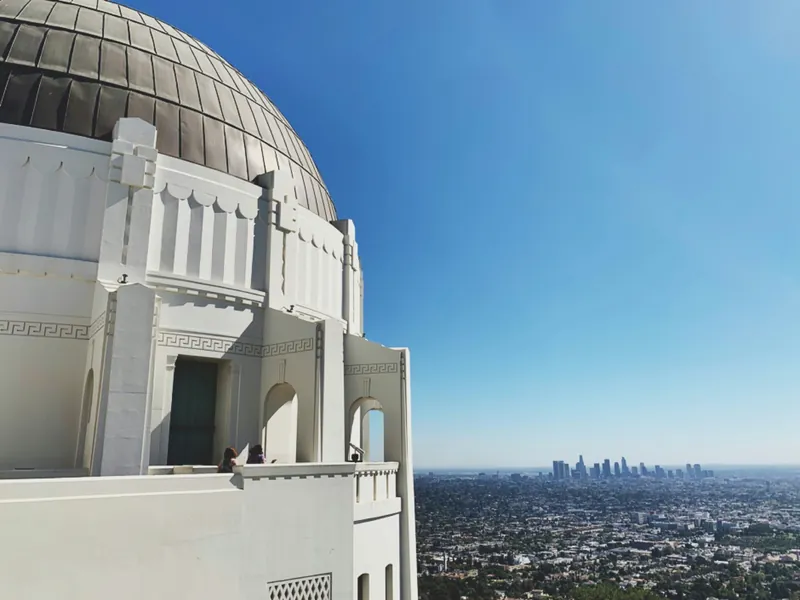
Griffith Park and Observatory Highlights
Griffith Park, donated to the city by Griffith J. Griffith, contains the Bronson Caves, which served as filming locations for the 1960s Batman series, Bonanza, Fantasy Island, and Little House on the Prairie. Hikers can approach the observatory via the Boy Scout Trail, formerly known as the East Observatory or East Griffith Observatory Trail. The building's Historic Level holds the centrepiece pendulum, the rotunda murals, and the Edge of Space exhibit, while the four levels—Historic, Mezzanine, Middle, and Lower—are linked by short corridors with lifts and ramps. The view of the observatory itself gained wider recognition after being featured in the film La La Land.
Practical Information
Visitors can reach Griffith Observatory by public transportation, walking, biking, driving, or shared-ride services.; 2800 E Observatory Rd, Los Angeles, CA 90027; LADOT DASH Observatory line from Vermont/Sunset Metro B Line
On-site parking lot and adjacent roads; Accessible parking is available near the entrance to the Griffith Observatory, with several designated spaces.; Paid parking near, free parking downhill
Tuesday-Friday 12:00-22:00; Saturday-Sunday 10:00-22:00; Closed Monday
Free; Admission to the Griffith Observatory is free.; Free admission; planetarium per-show ticket
Griffith Observatory is owned and operated as a public service by the City of Los Angeles, Department of Recreation and Parks.; Modest fee for planetarium programs; staged shoots prohibited on rooftops, café terrace, and interior
Session Tips
- Tesla coil demonstrations produce lightning-like bolts and loud buzzing sounds and are typically scheduled once per hour.
- Griffith Observatory can be a busy, stimulating environment, especially on weekends, summer, and holiday periods.
- Photographers should pause to enjoy the sunset in person, not just shoot it.
- Plan to show up 15 minutes early to avoid missing the tour start.
- Hikers can continue up Mt Hollywood from the observatory to get additional great views.
What to Wear
- Visitors to the Griffith Observatory should dress in layers, especially for sunset or stargazing.
- Wind picks up after dark at the hilltop position, so visitors should bring a layer even in summer.
- Wearing comfortable shoes is recommended at the L.A. Zoo because visitors will be walking on slightly hilly ground.
When to Shoot
Best Time to Photograph
1:24 PM - 1:49 PM
1:49 PM - 2:49 PM
12:34 AM - 1:34 AM
1:34 AM - 1:59 AM
Best Season
The best time to photograph from Griffith Observatory is after rain, when the smog layer is cleared and distant mountains are visible.
Avoid
weekends and sunset
| Month | Sunrise | Sunset | Daylight |
|---|---|---|---|
| Jan | 06:58 | 17:07 | 10h 8m |
| Feb | 06:37 | 17:37 | 10h 59m |
| Mar | 07:03 | 19:01 | 11h 57m |
| Apr | 06:21 | 19:24 | 13h 2m |
| May | 05:51 | 19:48 | 13h 56m |
| Jun | 05:41 | 20:06 | 14h 25m |
| Jul | 05:52 | 20:05 | 14h 12m |
| Aug | 06:14 | 19:40 | 13h 25m |
| Sep | 06:36 | 18:59 | 12h 22m |
| Oct | 06:58 | 18:18 | 11h 20m |
| Nov | 06:26 | 16:49 | 10h 23m |
| Dec | 06:51 | 16:45 | 9h 53m |
What to Expect During Your Session
Open late nearly every evening, Griffith Observatory supports daytime shots of the Hollywood Sign and evening astrophotography, with free public viewing through the Zeiss 12-inch refracting telescope on clear nights. Crowds peak on weekends, summer, and holidays, so to capture the building without people, photographers should climb to shoot from the side or above rather than the straight-on front view, and bring a 24-240mm telephoto lens, tripod, sunscreen, bug spray, and water. Those seeking quieter alternatives can continue up Mt Hollywood for additional views, reaching the main viewpoint in 40 minutes on the main trail or 20 minutes via the shortcut.
The tour is 90 minutes long with multiple daily tours offered Tuesday through Sunday.
Hikers can reach the viewpoint in 20 minutes via a more aggressive shortcut trail or 40 minutes on the main trail.
The Samuel Oschin Planetarium show lasts 40 minutes and is open to ages 5 and older.
On September 19, 2026, a Public Star Party runs from 2:00 p.m. to 9:45 p.m. at Griffith Observatory.
“After sunset, the author stayed for twilight shots on the hike back down Western Canyon Rd.”
Getting There
Access & Transit
- Wheelchair access
- As a covered entity under Title II of the ADA, the City of Los Angeles provides reasonable accommodation to ensure equal access to the Observatory's programs, services, and activities.
- Parking
- There is paid parking near the Observatory and free parking located downhill.
- Public transit
- Public transportation is the easiest way to visit; Metro Red Line to Vermont/Sunset, then DASH Observatory bus; DASH Observatory bus
- Walking distance
- Visitors can also hike to the Griffith Observatory using trails in Griffith Park.
- Bike friendly
- Visitors can bike to Griffith Observatory.