Elbphilharmonie
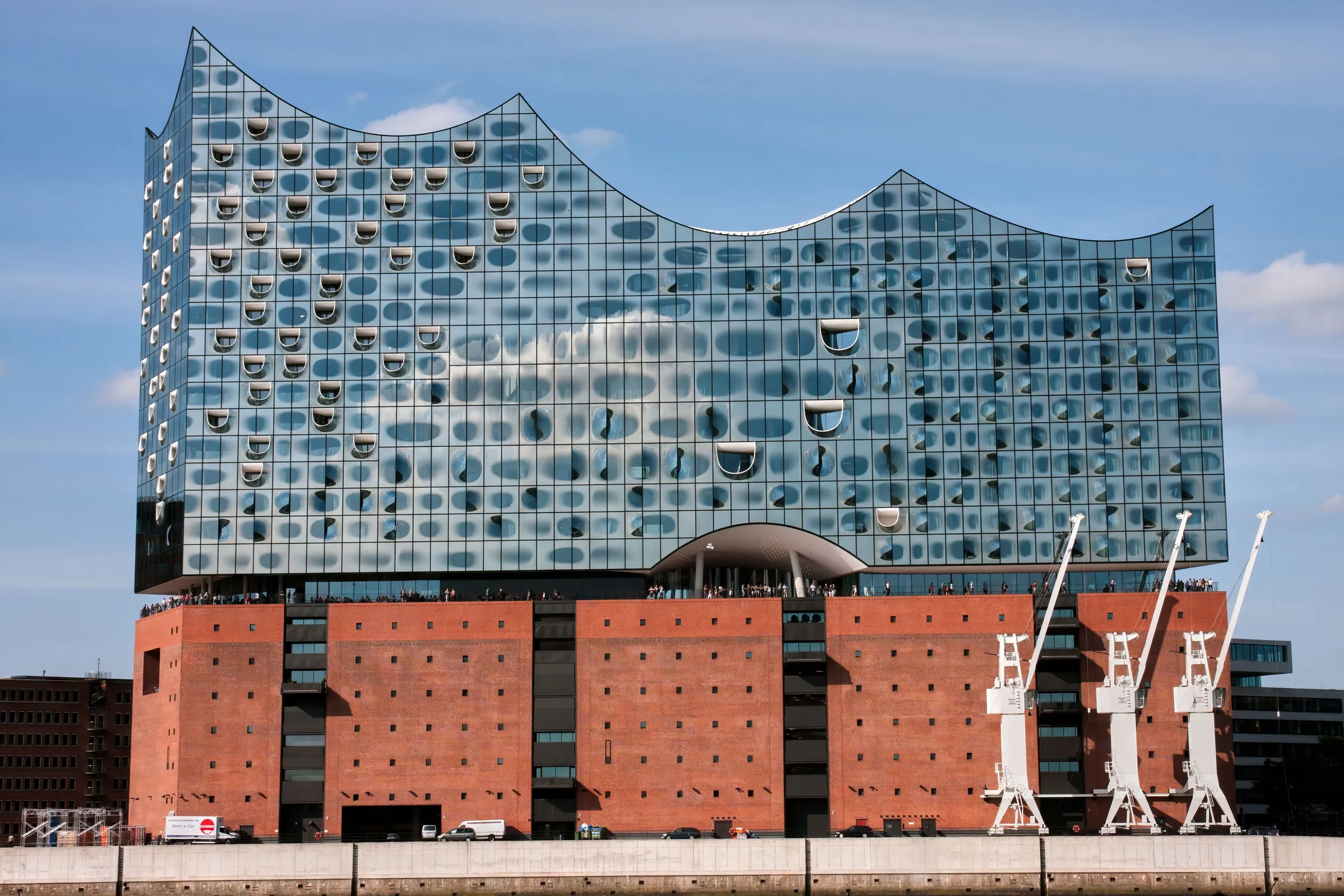
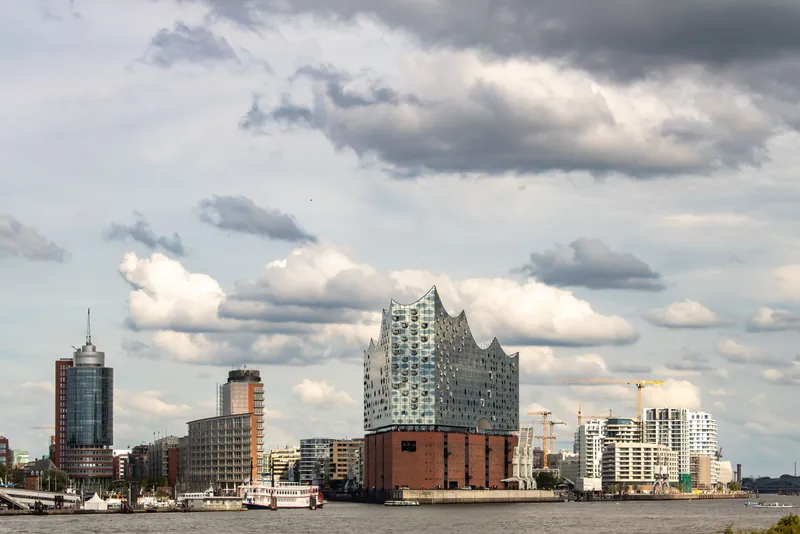
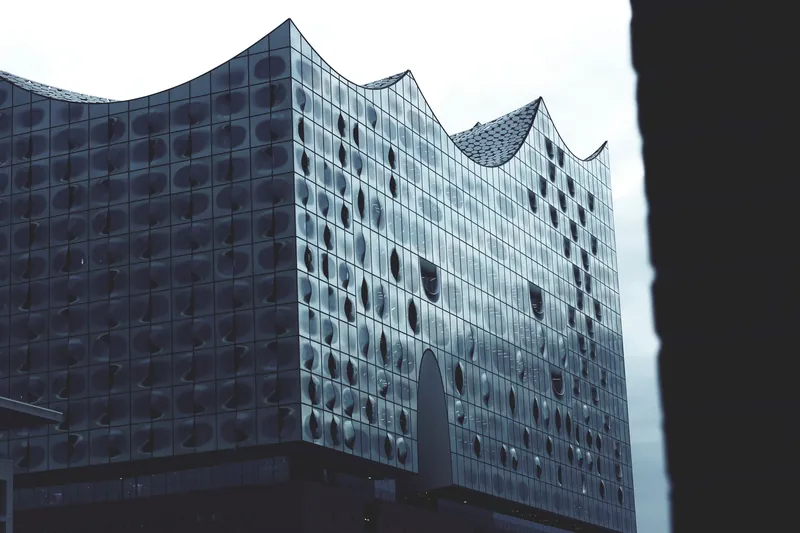
The Elbphilharmonie is a striking glass concert hall resembling a hoisted sail, water wave, iceberg or quartz crystal perched atop an old brick warehouse.
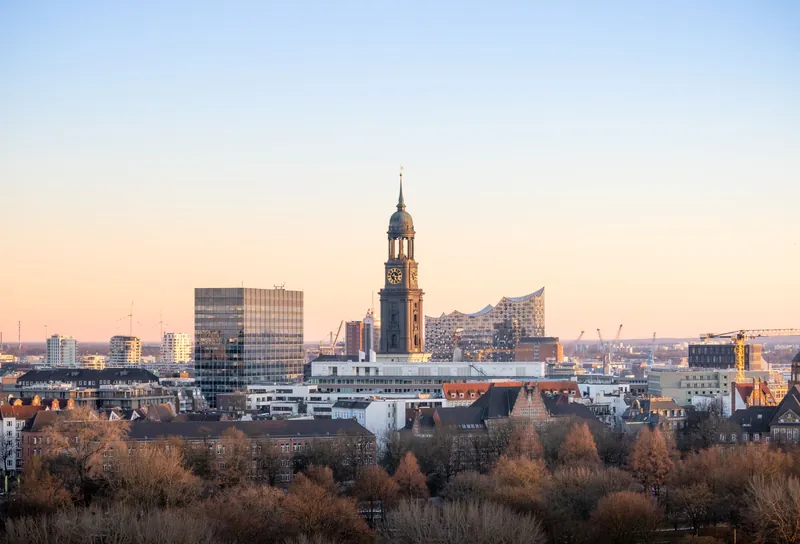
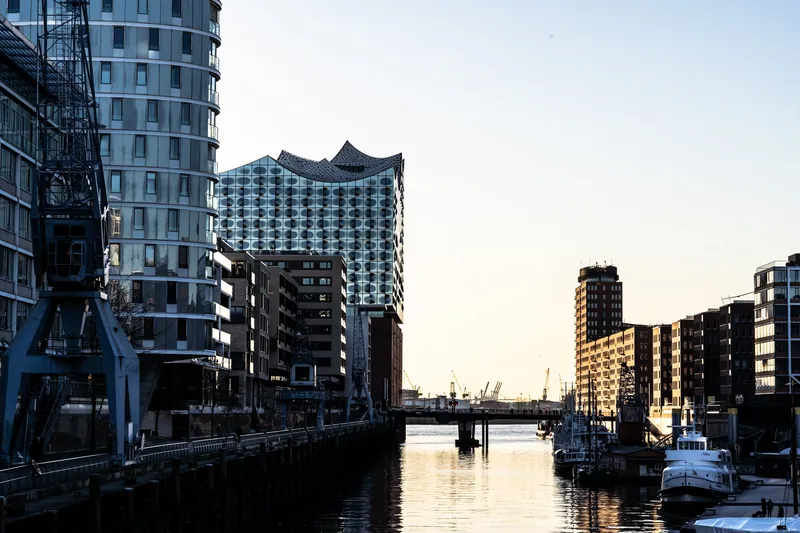
The Elbphilharmonie sits on Hamburg's Elbe River at the western tip of HafenCity, atop the Kaispeicher A, a former tea, tobacco, and cocoa warehouse that opened on January 11, 2017. Its glass sail-like superstructure crowns Großer Grasbrook, where photographers have tagged 60 photos across 23 spots, and the hall marks 10 years in 2026.
Elbphilharmonie's Glass and Brick Design
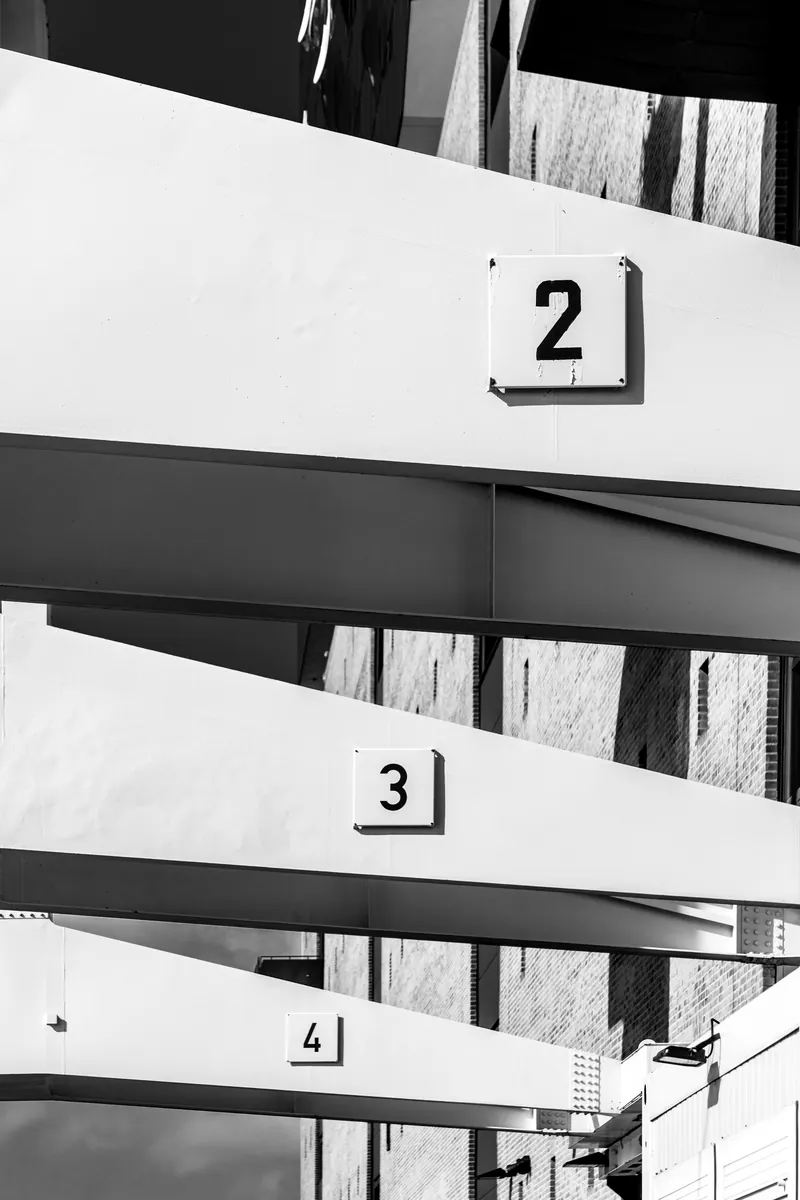
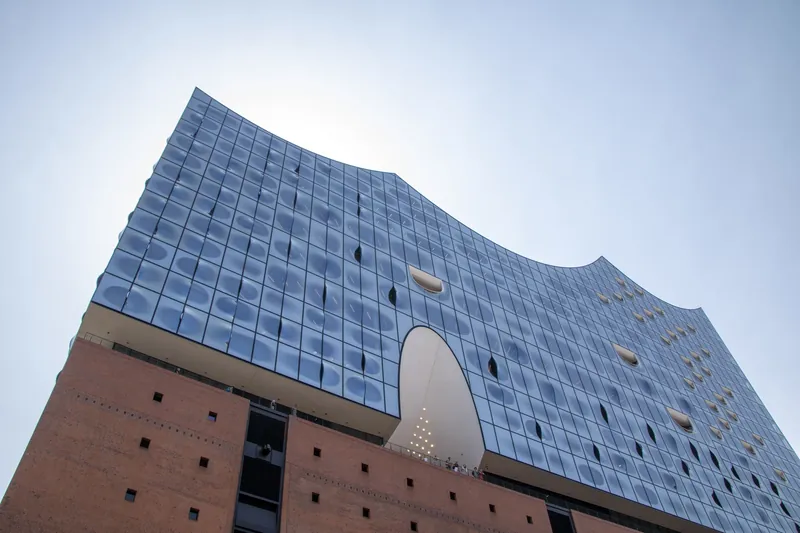
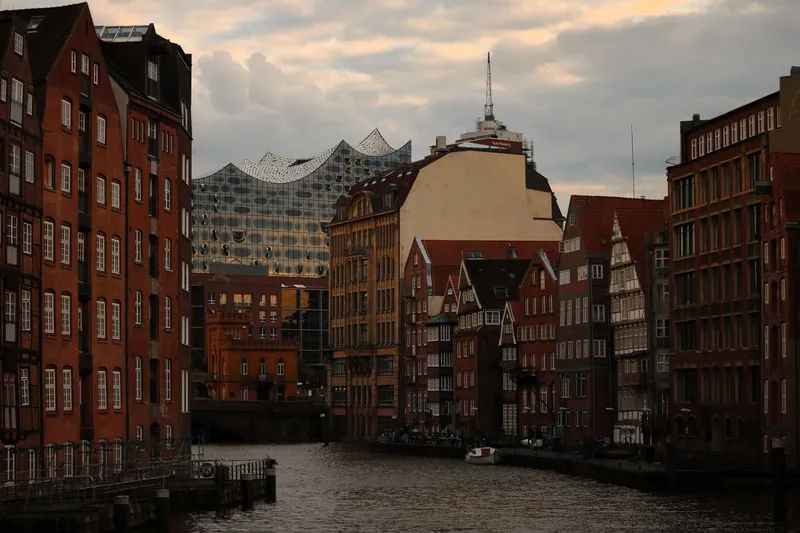
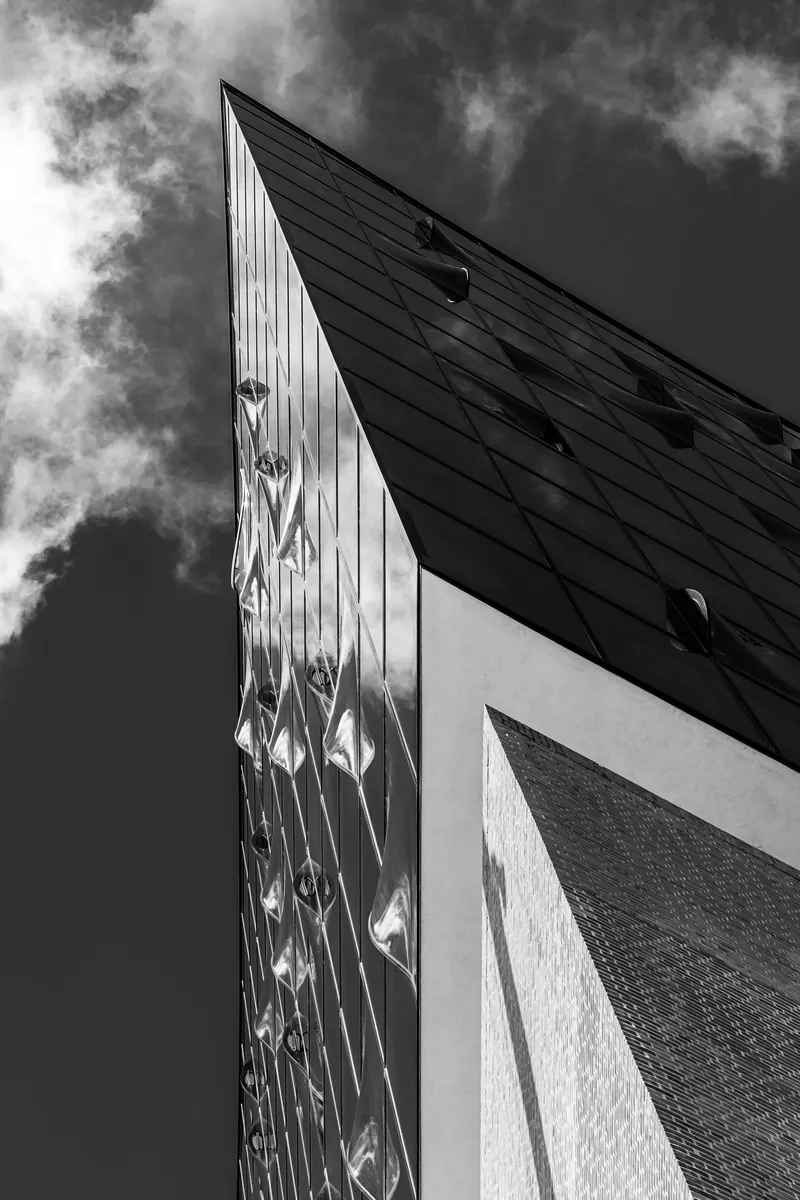
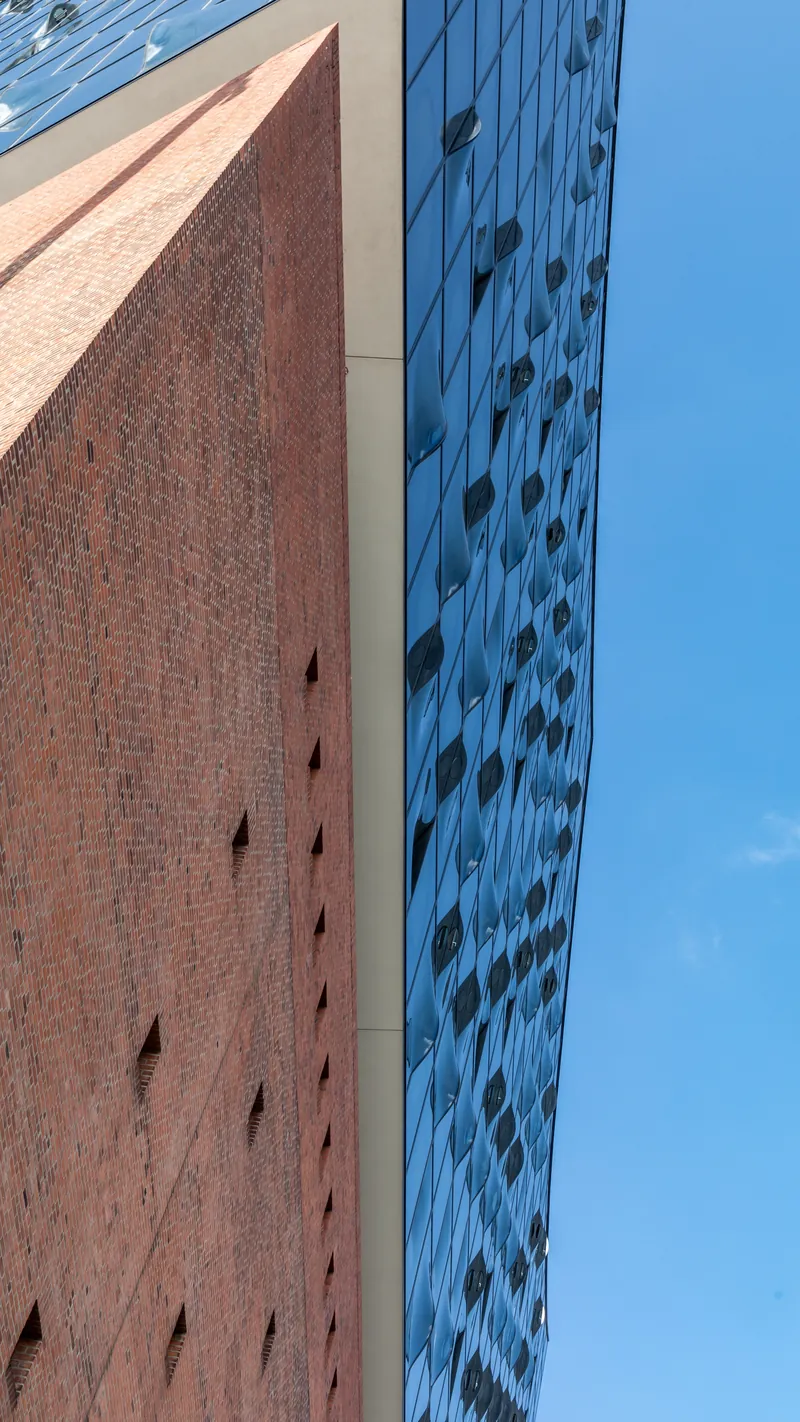
The Elbphilharmonie in Hamburg was designed by Herzog & de Meuron and built directly on the foundation of the old Kaiserspeicher. The new glass superstructure, composed of roughly one thousand curved windows, rests on the original 1966 brick façade of the Kaispeicher A warehouse. The combination of historic masonry and reflective glazing gives photographers a strong architectural subject from the surrounding streets and the waterfront.
Best Photo Spots
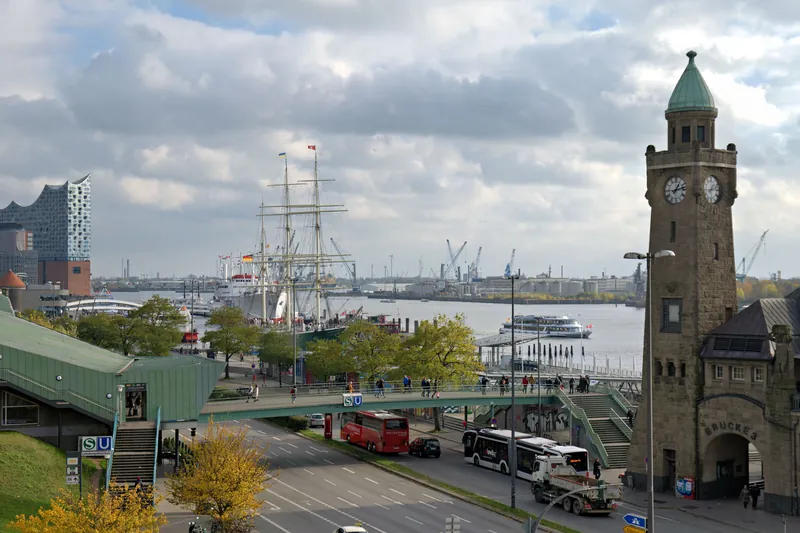
Here are 5 photo spots near the Elbphilharmonie, featuring a public plaza, elevated terraces, a bridge, a ferry street, and a boulevard.
The Plaza
Photographs of This Location
Glass Facade and Concert Hall Design
The Elbphilharmonie features a glass facade of curved, cut panels that reflect the sky, water, and city, producing shifting visual patterns throughout the day. The building houses one of the largest and most acoustically advanced concert halls in the world and stands as a significant example of modern architecture. Inside, the main concert hall spans five floors, with steeply raked seating rows that offer clear sightlines to the stage and an interior perspective on the structure's layered design.
Common Questions
Animals are not allowed on the Plaza, except for guide or assistance dogs (e.g. guide dogs for the blind) and dogs in transport boxes.
Elbphilharmonie Hamburg Harbor Concert Hall
The Elbphilharmonie sits at the tip of the Großer Grasbrook in Hamburg's harbor, constructed atop the historic Kaispeicher A, a former warehouse used for storing tea, tobacco, and cocoa. The concert hall opened on January 11, 2017, with an official inauguration spanning January 11 and 12, and it will mark its 10th anniversary in 2026. It ranks as a community-photographed landmark, frequently captured by visitors documenting the surrounding port infrastructure.
Practical Information
HVV rings A–F; Baumwall (U-Bahn), Am Kaiserkai (bus), Elbphilharmonie (ferry); The nearest U-Bahn and bus stops are 200 to 1000 meters away from the Elbphilharmonie.
€5.50/hour, €50 daily max; 24/7; 4 € per Stunde
60–90 minutes before start; Smoking is prohibited throughout the Elbphilharmonie, including on balconies and the entire Plaza, including outdoor areas.; 11:00–20:00 daily (closed on holidays)
free; 3 Euro; 15%
Recording concerts on audio or video media is not permitted.; Using a tripod is allowed on the Plaza as long as you do not disturb other visitors.
Photowalk
Walk the Elbphilharmonie Photo Trail
2 routes through the same vantage points, from a quick loop to a full afternoon.
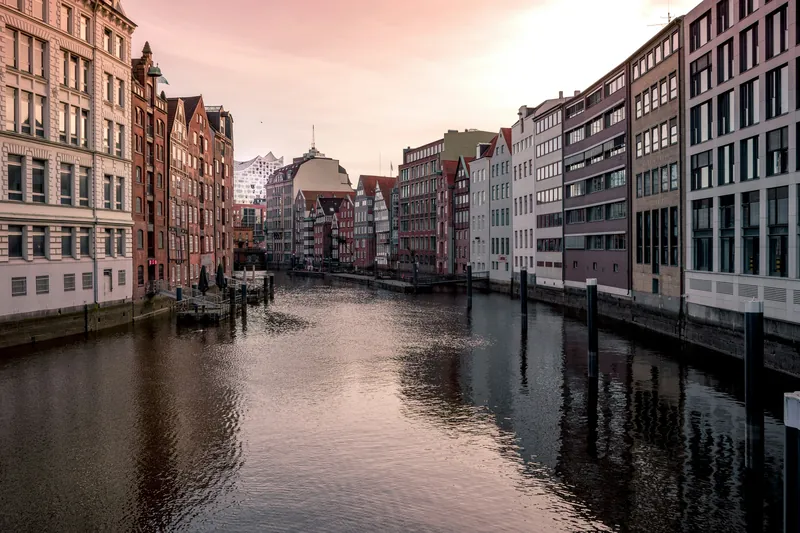
A photo spot named "Elbphilarmonie (view from Arningstraße (Fähre))" is located 0.48 km from the main location.
Tipps fürs Shooting
- For first-time visitors it is recommended to arrive at the main entrance at least 30 minutes before the event begins.
- Concert ticket holders can access the Plaza from two hours before the event begins, without a separate Plaza ticket.
- The building's glass façade covers 21,800 square meters, with approximately 5,000 square meters of curved glass that transforms the structure into an enormous quartz crystal.
- At the author's visit, the queue at the Plaza was never particularly long, and a free ticket was obtained on site after waiting about two minutes.
- Head to the Marco Polo Terraces at sunset for a photo of the Elbphilharmonie in the sun's glow.
What to Expect During Your Session
The Elbphilharmonie's 21,800 square meter glass façade, including roughly 5,000 square meters of curved glass, shifts throughout the day as it reflects the sky, the water, and the city lights, and the structure can be photographed from any direction. The 80-meter curved escalator known as "The Tube" leads up to the Plaza, which looks directly down the Elbe, and the Marco Polo Terraces are worth positioning for at sunset. A typical visit runs 1 to 2 hours, though concert ticket holders can enter the Plaza up to two hours before showtime, and guided tours from the Kaispeicher to the Grand Hall are available for additional context.
Guided tours of the Elbphilharmonie run from the Kaispeicher to the Plaza and into the Grand Hall.
Riding "The Tube", the 80 m curved escalator, is a signature experience on the way up to the Plaza.
A typical visit to the Elbphilharmonie lasts 1 to 2 hours.
Getting There
Access & Transit
- Barrierefrei
- Wheelchair users use a separate side entrance to the right of the main entrance that leads via a corridor to the lifts, which measure 100 x 180 cm.
- Parken
- The Plaza and concert halls are not directly accessible from the parking garage; visitors must first go to the ground floor entrance.
- Öffentliche Verkehrsmittel
- U3 Baumwall to Rödingsmarkt; Am Kaiserkai; U3 to Baumwall (Elbphilharmonie)
- Fußläufig
- 200 bis 1000 Meter