Balboa Park
Balboa Park is San Diego's 1,200-acre cultural park featuring museums, gardens, and historic architecture.
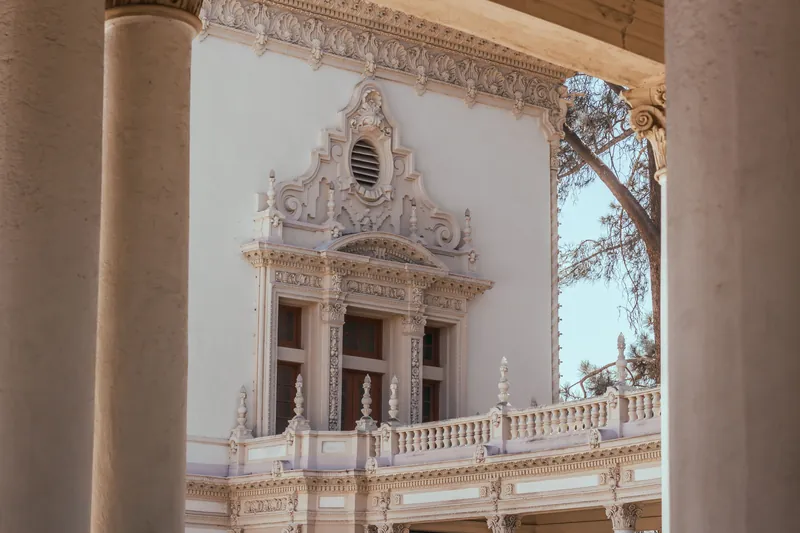
Set aside in 1868 and named for Spanish explorer Vasco Núñez de Balboa, San Diego's 1,200-acre park features Spanish Colonial Revival buildings from the 1915-1916 Panama-California Exposition, including the Museum of Photographic Arts.
El Prado's Architecture and Gardens
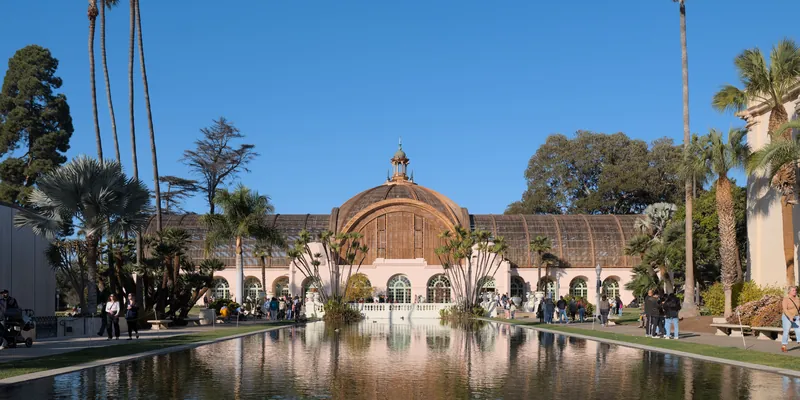
San Diego's Balboa Park, set aside on May 26, 1868 as a 1,400-acre tract and named for explorer Vasco Nunez de Balboa, centers on El Prado, where the Cabrillo Bridge and surrounding cultural buildings were designed by architect Bertrum Goodhue for the 1915-1916 Panama-California Exposition. These structures mark the first use of Spanish Colonial Revival style in the United States, and their ornamented facades contrast with the park's serene gardens and reflective ponds. The grounds have been continuously cultivated since Kate O. Sessions leased thirty acres in 1892, so mature trees frame compositions in every season.
Best Photo Spots
Here are 6 photo spots throughout Balboa Park, featuring tranquil gardens, cultural centers, and historic landmarks.
Balboa Park Lily Pond
Photographs of This Location
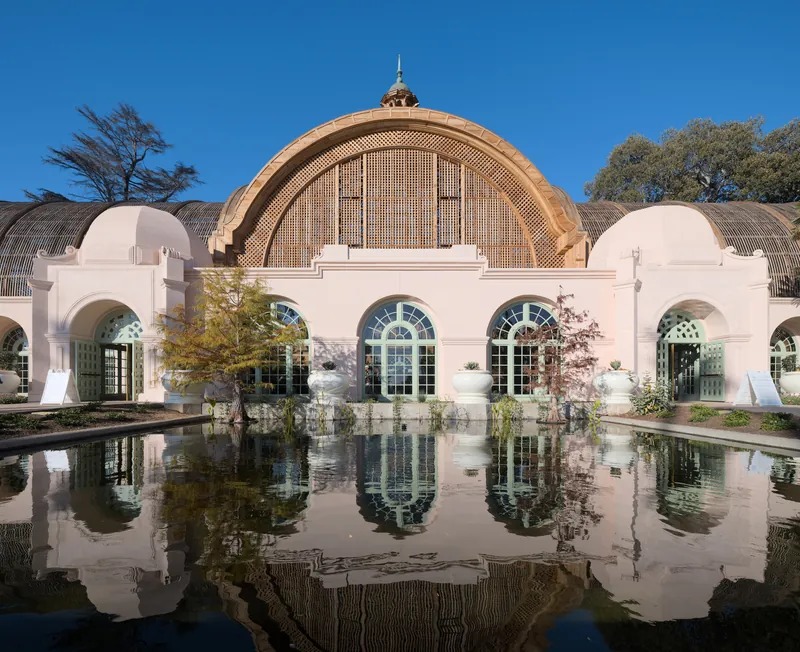
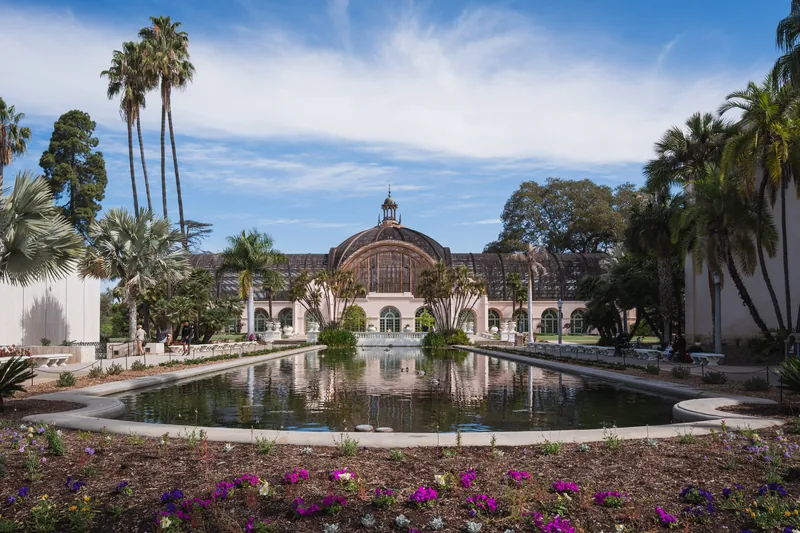
Balboa Park's Historic Structures and Landmarks
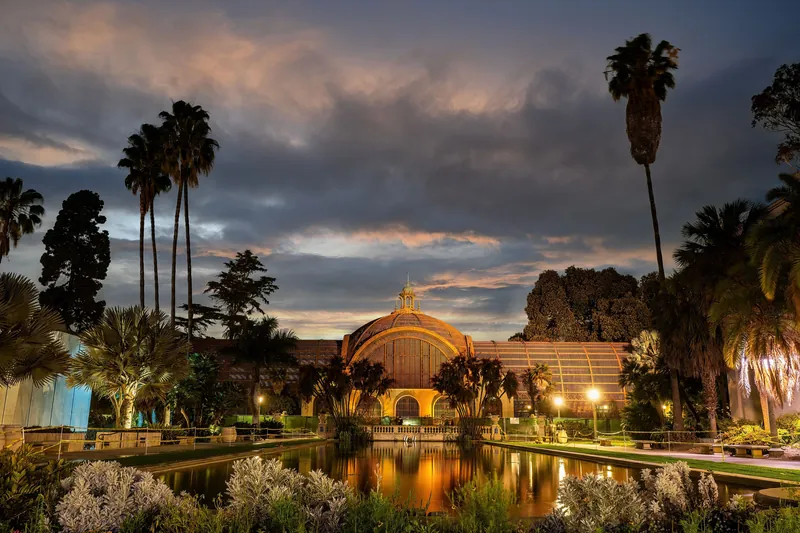
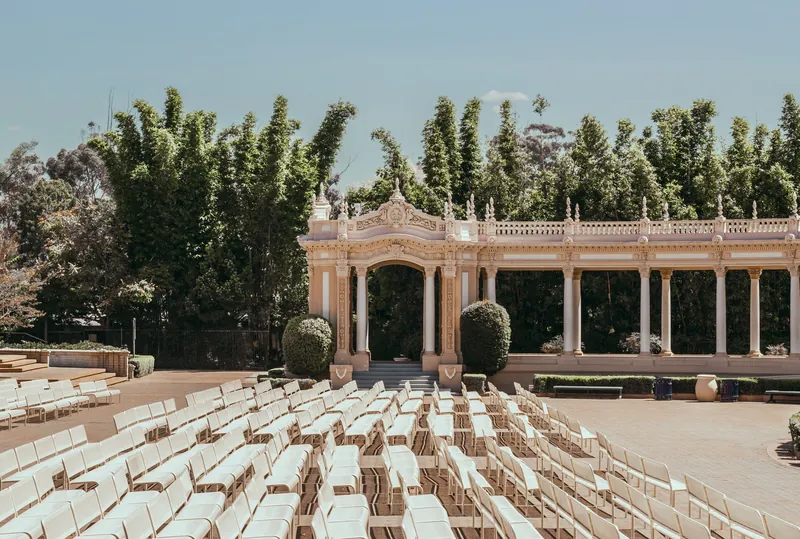
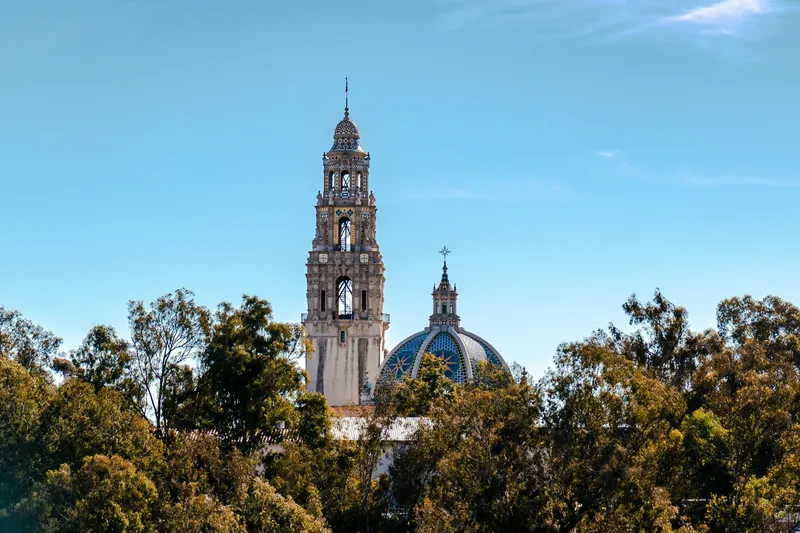
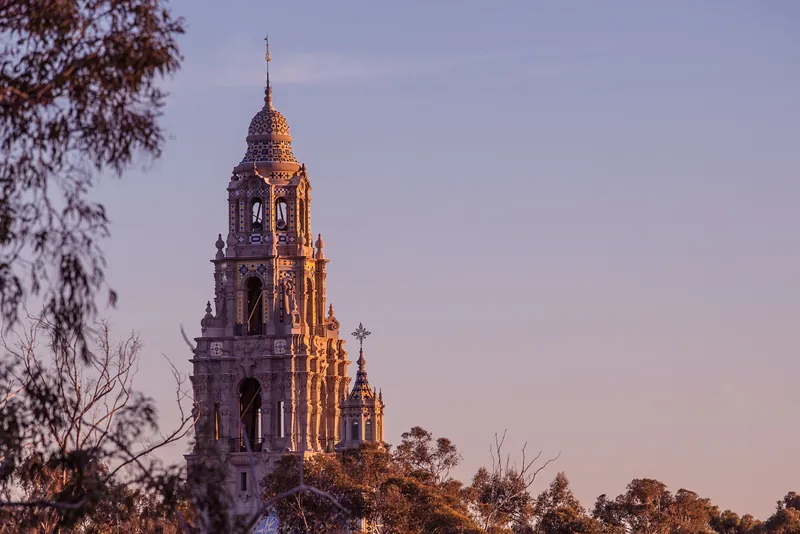
Balboa Park, named for Spanish explorer Vasco Núñez de Balboa and set aside in 1868, was officially granted by the California Legislature on February 4, 1870. Most of the park's structures date to the 1915 Panama-California Exposition and the 1935-1936 California Pacific International Exposition, including the California Tower, which reopened in 2015 after a major renovation. The Spreckels Organ Pavilion, donated by John D. and Adolph Spreckels in 1914, the Bea Evenson Fountain built in 1935 by architect Richard Requa, and the San Diego Museum of Art, founded in 1926 with a collection spanning over 7,000 years, offer further subjects.
Common Questions
Park museums offer free general admission on a rotating basis throughout each month to San Diego City and County residents and active military personnel and dependents.
The Visitor Center is located in the House of Hospitality at the Plaza De Panama stop, the first stop from Inspiration Point on the free tram route.
The free tram runs daily from 8 a.m. to 8 p.m. with pickups every 10 to 15 minutes from Tram Central at Inspiration Point.
Weekday mornings around 9:00 am are the least crowded times for a photoshoot at Balboa Park.
A weekday morning or late afternoon session at Balboa Park helps avoid heavy weekend crowds and gives more flexibility to explore different spots.
The Japanese Friendship Garden in Balboa Park requires an entry fee.
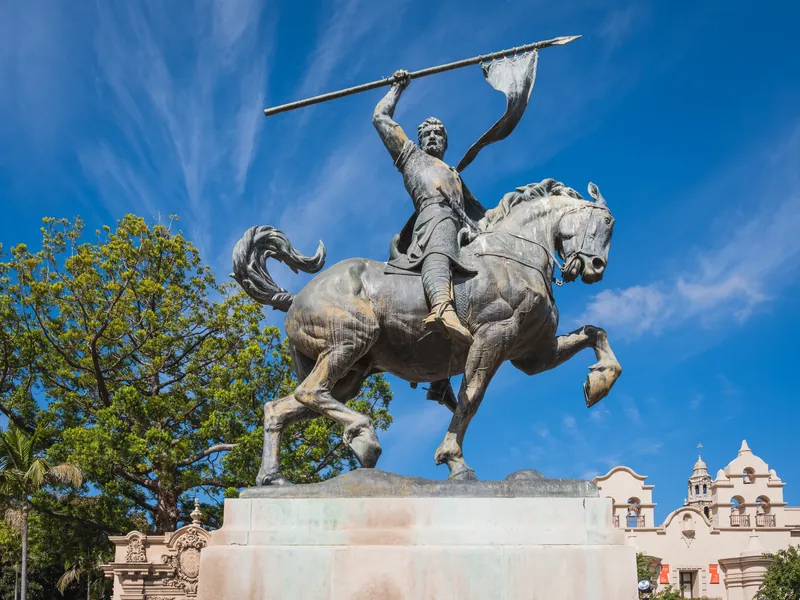
Balboa Park's Architecture and Cultural Landmarks
Balboa Park's Spanish Colonial Revival architecture, visible in structures like the San Diego Museum of Art and the Museum of Photographic Arts, offers distinctive photographic subjects, and the park's buildings are registered landmarks with deep historical significance. Further enhancements came with the 1935 California Pacific International Exposition, which added the Old Globe Theatre, while the Japanese Friendship Garden represents the sister-city relationship between San Diego and Yokohama. Photographers interested in performing arts can plan around the Arts & Culture area's offerings, which include musicals and Shakespeare productions under the stars, and the site preserves a range of historic statues and monuments that reflect the park's long heritage.
Practical Information
Tram Central at Inspiration Point Parking Lot; Blue, Orange, and Green Line Trolleys; 8 a.m. to 8 p.m. daily, every 10-12 minutes
8 a.m. to 6 p.m. (park); 8 a.m. to 8 p.m. (city streets); First three hours free; $10 full day; $10 up to 4 hours; $16 full day
8 a.m. to 6 p.m. daily; 9 am to 6 pm; Sundays 2-3 p.m.
Free rotating Tuesdays; $10-$16; Free
A dedicated Balboa Park Permits and Facilities map is available for those needing permits for park sites.
Tipps fürs Shooting
- A weekday morning or late afternoon session at Balboa Park will help avoid heavy weekend crowds.
- For midday sessions at Balboa Park, look for shaded areas like Zoro Garden or the Japanese Friendship Garden to soften the light.
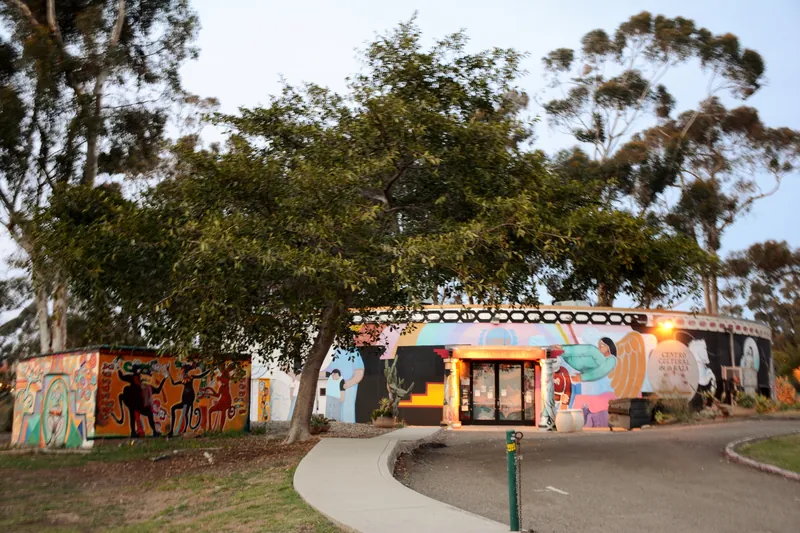
- The Lily Pond at Balboa Park is a tranquil oasis home to water lilies, lotus flowers, koi fish, and is a popular spot for photographers.
- Couples should coordinate outfit colors (ladies pick 2-3 colors, then have the guys match those 2-3 colors) and avoid matching or distracting patterns and logos.
- Book your engagement photographer at least 6 months in advance, especially during peak seasons.
Was anziehen
- Photographers recommend bringing comfortable shoes to walk between Balboa Park locations and changing into dress shoes or heels right before photos.
Photowalk
Walk the Balboa Park Photo Trail
2 routes through the same vantage points, from a quick loop to a full afternoon.
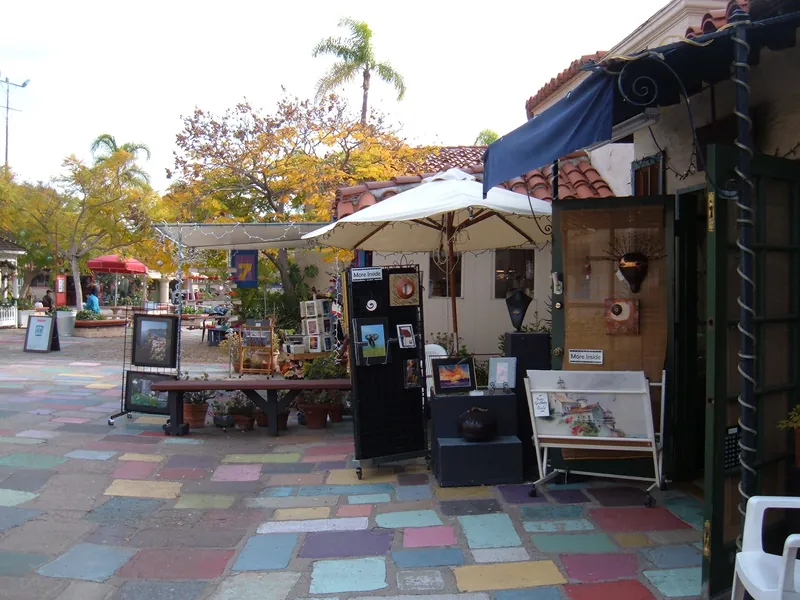
The Spanish Village Art Center features colorful ground, eclectic shops, and overhanging trees.
When to Shoot
Best Time to Photograph
1:19 PM - 1:44 PM
1:44 PM - 2:44 PM
12:30 AM - 1:30 AM
1:30 AM - 1:54 AM
Beste Jahreszeit
spring (March through December)
| Monat | Sonnenaufgang | Sonnenuntergang | Tageslicht |
|---|---|---|---|
| Jan | 06:50 | 17:05 | 10h 14m |
| Feb | 06:31 | 17:34 | 11h 2m |
| Mar | 06:58 | 18:56 | 11h 58m |
| Apr | 06:18 | 19:18 | 12h 59m |
| May | 05:49 | 19:40 | 13h 50m |
| Jun | 05:40 | 19:58 | 14h 17m |
| Jul | 05:51 | 19:57 | 14h 5m |
| Aug | 06:12 | 19:33 | 13h 21m |
| Sep | 06:32 | 18:54 | 12h 22m |
| Oct | 06:52 | 18:15 | 11h 22m |
| Nov | 06:18 | 16:47 | 10h 28m |
| Dec | 06:43 | 16:44 | 10h 0m |
What to Expect During Your Session
Photographers will find Balboa Park's variety most flattering during golden hour, the period just after sunrise or before sunset, when the light complements settings ranging from the Organ Pavilion's arches to the shaded quiet of Zoro Garden. For midday work, Zoro Garden and the Japanese Friendship Garden provide softer light under cover, and weekday mornings or late afternoons minimize weekend crowds. Visitors should plan to arrive 30 or more minutes early for parking, especially during the free summer International Organ Festival on Monday evenings from mid-June through August or the December Nights event on December 6 from 7 to 10 p.m.
Free tours of Central Mesa are offered by Forever Balboa Park on Tuesdays and the second, fourth and fifth Friday of the month at 11 a.m. in front of the Visitors Center.
Offshoot horticultural tours are offered every Saturday at 10 a.m. from the second Saturday in January through the Saturday before Thanksgiving.
A free summer International Organ Festival is held from mid-June through August on Monday evenings at 7:30 p.m.
The Balboa Birders lead monthly birding tours on the first Thursday of every month from 7:30 to 9:30 a.m.
Getting There
Access & Transit
- Barrierefrei
- Visitors with a disabled license plate or placard can park in any stall in Balboa Park lots and on park roads, regardless of blue zone designations.
- Parken
- Inspiration Point provides ample parking at Park Boulevard and Presidents Way, on the south side of Park Boulevard.
- Öffentliche Verkehrsmittel
- MTS Route 120, Route 7, Rapid 215; Fashion Valley Transit Center, Route 120; City College Trolley Station, Route 7
- Fußläufig
- 10 minutes
- Fahrradfreundlich
- Balboa Park has multiple bike racks, with the closest to the Old Globe located by Alcazar Garden and Plaza de Panama.